| Bentgrasses.com - An Informational Website From Seedland.com |
|
NOTE: You have reached an information page.
To view
product prices visit our store at
Seedland.com |
|

ORDER
ONLINE |
PHONE ORDERS:
PHONE
Phone Business hours - Mon-Fri. 9-5 EST ONLY - Contact via
Email
 |

There are three types of bent grass seeds used for lawns:
The Primary types of bentgrass are listed below - Of these the most planted by far (over 95% ) is creeping bentgrass. - It is also the most used for putting greens on Golf
courses and lawns.
Each bentgrass variety retains particular qualities relating to climate, salt tolerance, depth of color, and texture.
Colonial bent grass has been in
the United States since the early days of the colonists. This variety was brought from
Europe to reproduce the fine lawns of their homeland.
Colonial Bentgrass
is the tallest of
the bents with very fine texture and the density associated with the bent grasses. Some
newer varieties have improved color, are hardier and have better disease resistance
than the original strain. Colonial bent grass is the strongest of the bents in resistance
to wear and temperatures that extend into the transitional area.
Colonial bent grass is easily grown from seed by planting at the rate
of ˝ pound to 1 pound per 1000 square feet and 25- 45 pounds pre acre. Colonial bent
grass is adapted to the cooler, moist areas or the northern United States and the upper
shores of the Pacific and the Atlantic coastlines. Fertilization for regular lawn
usage will be medium. Establishment time for colonial bent grass is slow.
Creeping bent grass is used extensively
in lawns, golf courses, athletic fields for the creeping, dense growth and beautiful
coloration and short mowing capabilities. It is used primarily on golf putting greens
because of the denseness and mowing qualities. The color of
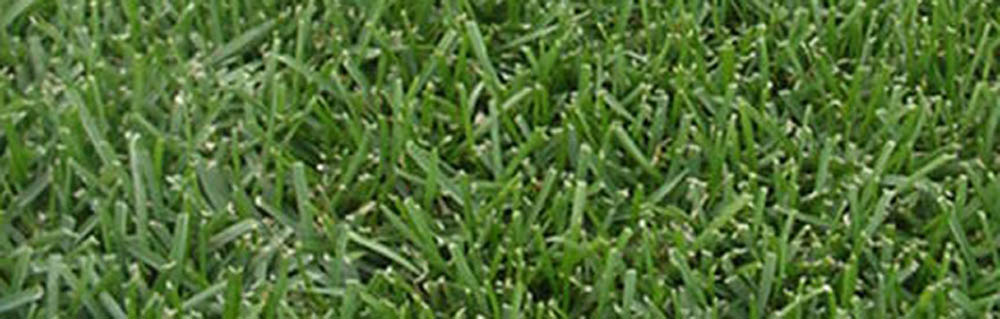
Creeping Bentgrass can range from olive green to a
very light green. Varieties have been developed for better hardiness, heat tolerance, salt
tolerance, wear-ability and better re-growth in higher traffic areas.
PENNCROSS IS THE MOST RECOMMENDED BENT GRASS FOR HOME LAWNS!
Penncross is a more uniform variety with superior turf quality, disease tolerance and wear tolerance. Where play is heavy, Pennington Seed's Penncross is probably the better choice. Penncross was released by Pennsylvania State University in 1954. Seeds are harvested from crosses of three vegetatively propagated strains.
Read more Info on Penncross Bentgrass.
Another creeping bentgrass seed variety sold by Seedland.com from Pennington Seed is 13M.
13M Creeping Bentgrass is the #1 rated creeping bent grass with resistance to the #1 fungus affecting manicured turf grass, Dollar Spot. This fine leaf textured bent grass provides outstanding year round density and is less prone to scalping which are features that turf managers seek from bent grass.
Creeping bent grass
establishes faster than Colonial and is adapted to the fertile, low acidic, and well
draining soils. It can be used in the overseeding of the grasses such as
Bermuda in the
transitional area on golf courses. Creeping bent grass can be grown from seed or
vegetative propagation. The two most well known seeded varieties are Seaside and
Penncross. Some of the other vegetative varieties are Washington, Pennlu, Toronto, and
Arlington. Fertilization requirements are generally medium.
Velvet bent grass has the finest texture of all the bent grasses.
It is one of the oldest grasses used for lawns and golf courses in Europe. Velvet Bentgrass was brought to the US for use on the earlier putting greens because of the texture and ability to be clipped closely.
Velvet Bentgrass does not grow the best in the transition area and is used mainly in the far upper northern area of the US in the coastal areas, which are well noted for the moist, cool climates and more fertile soils. It grows more like the colonial version only shorter. Velvet bent grass is lighter in color than colonial and creeping varieties.
Establishment time is dependent upon the variety chosen. Fertilization requirements range from medium to high with regard to the usage of the turf. Water requirements are high in the dryer areas. Velvet bent grass cannot tolerate the warm, dry areas and needs lots of moisture. Fertilization requirements can be high depending upon the usage and wear, and mowing schedules.
|
Bentgrasses.com - Growing
a beautiful tomorrow!® |
|
|